Thursday, June 16, 2011
DeVon Franklin the VP of Production at Columbia Pictures talks about his core values
DeVon Franklin the VP of Production at Columbia Pictures talks about his core values from Media Missionary School on Vimeo.


Wednesday, June 15, 2011
Chariots of Fire

From the opening scene, Chariots of Fire invokes deep emotions that have captivated audiences for over 30 years. It certainly captivated me as I watched the British national track and field team training for the upcoming 1924 Olympics to be held in Paris, France. The scene evokes the sense of optimism, hope and victory as each team member is running on the beach in unison.
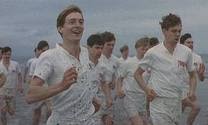
Chariots of Fire is based on a true story. The part of the story that shocked the world was Eric Liddell’s refusal to run in the 100 meter heat because the event fell on the Sabbath. He faced enormous pressure from his country, including the Prince of Wales and future King of England. His refusal set off a firestorm of criticism. Is God first or is your country first? Is national pride more important than your integrity and beliefs.

Harold Abrams, the son of Jewish immigrants from Lithuania, is also fighting his own battles. He faces enormous odds in discovering his identity and purpose. Abrams is trying to run his race. But what is the source of his power. Liddell asks the question, where does the power come from to see the race to the end. It is the central question of Chariots of Fire. Two very different men. Two very different belief systems. Each will have to find the source of that power in order to fulfill their destinies.

Bottom line. if you haven’t seen this film or if you’ve seen it multiple times, Chariots of Fire will inspire you and provide a perspective and insight on how you can see your race to the end.
Tuesday, June 14, 2011
Romantic Comedy, Rebecca St. James scheduled to shoot in Cincinnati

stambaugh@vineyardcincinnati.com
Friday Night Flicks
Friday June 17th we will feautre "Chariots of Fire." One Friday each month Vineyard Cincinnati is hosting a movie night. You can watch a movie and engage in discussion about its meaning and spiritual significance. Free refreshments and drinks. 7pm to 9:30pm on the campus of Vineyard Tri County in Springdale. For more info contact Isaac Stambaugh at stambaugh@vineyardcincinnati.com
"Fenced Off" trailer released

Rebel Pilgrim productions and Vineyard Cincinnati recently release the official trailer and website for the independent racial drama "Fenced Off." The film is still in post-production but may be screened as early as this fall. For more information visit www.FencedOff.com
Monday, June 13, 2011
The Company Men

The Company Men, is one example that serves this category well. Ripped from the headlines, this film is one that practically everyone can relate to. With the current economic downturn, millions have lost their jobs. Who hasn’t been affected at least on some level? Somehow I believe even future audiences will have no problem finding The Company Men just as relevant.
This is one of the best films I’ve seen this year. It debuted at the 2010 Sundance Film Festival and received substantial critical acclaim. The Company Men features an all-star cast including Ben Afflack, Kevin Costner, Chris Cooper, and Tommy Lee Jones. Some might suggest this film does not contain a strong faith message, but I disagree. Faith is essential in surviving difficult and challenging situations. And, believe me, the characters in this film are going to need all the faith they can find in order to survive.

This film is more than just a film about loosing a job. What defines us as a person? What’s really important? What can we live with, and what can we live without? For some of the characters, their job and career define them as a person. They simply do not know how to function without the job. But others will have an opportunity to see there’s more to life than the corporate grind.

Another element to the film is Bobby Walker’s (Ben Afflack) brother-in-law, Jack Dolan (Kevin Costner) who speaks for the blue-collar worker as he questions the moral integrity of corporate America’s attitude toward the working class. Both Bobby and Jack constantly clash over this issue.

Despite the tragedies that it depicts, The Company Men is a film that embraces a message of hope. For each character, it really depends on if they are willing to wake up and realize what is truly meaningful and important in their lives. Sometimes a job loss or other tragic situations can serve as a wake-up call. That’s certainly true in the case of Bobby, Phil and Gene. The only question is will they wake up in time to change the course of their lives for the better?
Also, a tragedy in our lives can put us on a course that is better than where we were.
NOTE OF CAUTION: The Company Men is rated R for some language. The film is currently available on DVD and Blu-ray.
Saturday, June 11, 2011
Friday, June 10, 2011
The Role of Sundance

I found the atmosphere of Sundance to be both inviting and welcoming of questions and dialogue. Countless times after film screenings I would ask the people I sat with what their thoughts were and what the films they had seen meant to them. The majority of people were strangers I had never met. Without fail, everyone was willing to be open in their thoughts and opinions. This was a main characterization of my experience with the Sundance community. Numerous times on the bus trips between venues I started conversations about films. At other times I would passively listen as people talked sharing their experiences. What I noticed was that through conversation and exposure to alternative viewpoints, people’s perceptions could be softened if not changed.
On more than one occasion I talked with people at Windrider who had seen a film that they saw little value in, only to reconsider their initial position in light of the value that someone else had ascribed the film. One time while I was out to dinner with a friend we met a homosexual believer who saw Higher Ground. As we dialogued about it, the man said that he thought it was alright. After me and my companion shared why we enjoyed the film and what it meant to us he said shaking his head, “I guess it was really, a pretty good film now that I think about it.” After our conversation ended and we parted ways there was a sense that we were all three edified from it.

While I initially expected to be overwhelmed by a place I assumed would be hostile to my beliefs, I discovered a freedom to be open about my thoughts and opinions, especially in regards to my faith in Christ. In my summation this proves that the greater Sundance community is robust place open to discussion and the free flowing exchange of thoughts and ideas. Equally, the spiritual encounters I shared concerning the films I viewed and the people I engaged in discussion with demonstrate that Sundance is both a place where Christians can be challenged in some positive ways as well as partner in the shaping of peoples perceptions through sharing their own thoughts and beliefs.

Thursday, June 9, 2011
Afflicting the Comfortable

At the festival there were a number of films that set out to provoke thought and raise important questions about various viewpoints. How To Die in Oregon made a case for allowing the right to die through assisted suicide. Had I viewed the film, I have no doubt that I would have been challenged by it. Films like Hell and Back Again and Martha Marcy May Marlene might have provided questions I would have had to wrestle with, if I would have been able to stay awake in during their midnight screenings. Of the films I did screen, one challenged me in a personal way that I’m still contemplating.
The Redemption of General Butt Naked tells the story of Joshua Milton Blahyi, a former mass murder who experiences a dramatic conversion to Christianity. Echoing a story very similar to the conversion experience of Paul in the bible, the film asks many questions of it’s audience. According to the filmmakers Daniele Anastasion and Eric Strauss during the post film discussion, say that what they most wanted to do with the film was raise the question of whether or not a person like Joshua can be changed. While this was the question was the primary question the filmmakers wanted to provoke, I found that myself and the people I talked with were facing other questions the film brought up.

After the screening I talked with various people who were challenged and wrestled with their own personal questions. A lady I talked with stated she opposes the death penalty and believes in forgiveness, but forgiving someone who had killed 20,000 people was something she wasn’t sure about. She said that it was a question that she would be processing for awhile. In another conversation I spoke with a guy who didn’t think that Joshua should be executed, but that maybe he should be locked away for the rest of his life. In probing further he admitted that incarceration really wouldn’t be justice, but that he wasn’t sure what justice would be or if it was even possible. It was exchanges like these and many, many others that proved to be one of the main values of Sundance.

Subscribe to:
Posts (Atom)