Saturday, May 14, 2011

What is Your Story?

We all have a story. The story of your life is what will define you as a person. Maybe, you’ve never thought of it in that context. As a Christian, we have a personal story as well as a corporate one.

What exactly is that story, and why is it important? Perhaps, more importantly, are we telling it in a compelling fashion? Our story should be one that intersects with the story of Jesus. On a personal level, it is our journey toward becoming the image of Christ.

On a corporate level, it is about fulfilling the Great Commission and reaching the world. And If we are going to communicate that story, it needs to be biblically based. The problem is what is being reflected out to society is often a culturally-based Christian world view, which is slightly different than a biblical world view. The culturally-based Christian world view is a combination of our western way of thinking, media influences, traditional Judeo Christian values, 2,000 years of Christian traditions, and current trends in theology and culture.

Most often we express a combination of a Biblical and culturally-based Christian world view through our beliefs, behaviors, actions, attitudes and thought patterns. As we live out our lives we are telling our story. How can I distinguish a Biblical world view from a Christian world view that is culturally based? Lets look at a comparison of the characteristics between the two. In a Biblical world view, Jesus is both Savior and Lord, and the Holy Spirit directs and controls our lives. A culturally-based world view usually means that we maintain control of our lives. We may make Jesus our Savior but not our Lord.

A Biblical world view depicts a balanced view of the Scriptures. It’s all relevant and equally important. A culturally-based world view is more of a selective view of the Bible where some parts are emphasized and some are ignored. A Biblical world view interpretation of the Bible is through the Holy Spirit. A culturally-based world view is often seen through the eyes of man; therefore, the result is that often two extreme points of view can emerge—one that is conservative wherein God is an avenging God and the other a liberal view wherein God is a loving God. In a Biblical world view, God is both.

A culturally-based world view usually sees God as a distant God. A Biblically-based world view sees God as a personal God, who is involved in the daily lives of his people. In Biblical world view, the believer not only has a life of pleasure and happiness but also one of hardships and trials. A culturally-based world view would rather embrace a life of comfort, safety and convenience. A Biblically-based worldview sees every follower of Christ as a priesthood holder, which means that each of us has a calling and a part to play in bringing about the Kingdom of God on earth. A culturally-based world view usually sees the believer as one who sits on the sidelines and will occasionally enter the game but only temporarily.

If we are to express our story accurately, we must return to the true origins of the Word of God. Another way to look at this is to think about DNA. We, as human beings, share basically the same DNA as every species on the planet. The differences are only a couple percentage points. But that difference has profound implications. I’m sure you would agree that a human being and an elephant are two different things. There are sometimes subtle difference that are often difficult to distinguish on the surface between a Biblical and a culturally-based Christian world view. That why we must get our story straight.

So how do we communicate our story? For 1,500 years, the Gospel was basically communicated through the spoken word. With the translation of the King James version of the Bible and the invention of the printing press, we transitioned to the age of the printed word. Today, we are in a new revolution of change. We have now entered into a time where people no longer read but communicate through visual image. The key to reaching the world in the 21st Century will be visual storytelling.

Whether we like it or not, the world now communicates through visual images. But, for the most part, the Body of Christ has not adjusted to these new realities. The future is coming. In fact, it is already here. Screening is a way of life. Everywhere you look, there is some type of video screen looking back. Images and what they represent is our new reality. If you want to reach the world with the Gospel, we have no time to waste. We must adapt.

I believe every Christian has a responsibility to embrace the concept of visual storytelling. It is certainly important that we pray for and provide support to those who work professionally in film, media and entertainment as visual communicators. But equally important, we can become producers and content providers. Technology has created accessibility. Thanks to social media sites such as Facebook, we can now share and create videos and photos. Software now makes it possible for those who are not proficient in computers to create our own blogs and websites. It’s an exciting time and a new frontier as the cost of camcorders and editing software continue to plummet. Anyone who has an interest can acquire the tools necessary to become a visual storyteller.

As I said, we all can become producers and storytellers in this new world. It’s often been said that Christianity is ten years behind the times. With the times changing so rapidly, we can no longer afford such a luxury. Visual storytelling is the future. Now is the time to be ahead of the curve not struggling to catch up. We know what our story is and the means by which it must be communicated—visually. Now is the time to implement the plan.

Friday, May 13, 2011

Cincinnati, The New Hollywood

Perhaps, it’s a tad bit over the top to call Cincinnati the new Hollywood. However, this past March George Clooney came to town with his new film, The Ides of March. He spent over three weeks on several locations shooting throughout the area. Obviously, it created a great buzz in the city.

Not since the days of Rain Man back in 1987 has Cincinnati been this excited about filmmaking. Now news has just broken from Kristen Erwin, Executive Director of the Cincinnati and Northern Kentucky Film Commission. Marvel Studios will be shooting the $170 million budget film “The Avengers” here later in the year. Currently, filming started on April 26 in Albuquerque, New Mexico. The movie stars Robert Downey Jr. as Iron Man, Scarlet Johansson as Black Widow, Chris Evans as Captain America, Chris Hernsworth as Thor, and Samuel L. Jackson as Col. Nick Fury. As you can see, it’s an all-star lineup.

What has made all of this possible is Ohio’s new tax credit. Just as Michigan and Louisiana have lured away Los Angeles-based productions, Ohio has now gotten in on the act.

Things are looking up for area extras and crew members. Erwin estimates that The Ides of March spent approximately $7 million in the Cincinnati area. The Avengers being a much larger production will certainly surpass that number. George Clooney has certainly gotten the ball rolling by putting in a good word about the merits of shooting in Cincinnati. Clooney has the respect of his peers, and, with his help, Cincinnati will most likely see future film projects coming into the city in the near future.

So what makes Cincinnati a hot prospect? First, Cincinnati is a low cost town compared to Los Angeles. Whatever you think it’s going to cost to shoot here, take 30% off. Hotels, food and rentals will seem inexpensive in comparison. Second, Cincinnati has the infrastructure to support major film projects. Whatever you need, it’s here—production trucks, cameras, experienced crews—they’re all accessible. Third, Cincinnati has a friendly and accommodating attitude. In Los Angeles, most people are sick and tired of film production disrupting their daily lives. You won’t find that attitude here. In fact, the welcome mat is out. Whatever you need, you’ll probably get it. Local officials will be more than accommodating to close streets or do whatever it takes to get the job done.

Here’s something else to consider. In Los Angeles, most people play the angles concerning film and TV production. They want to get paid for everything. There’s nothing free. But I think here in Cincinnati you’ll see a different approach. We want the spotlight on our area so we can showcase our home town. Fourth, Cincinnati offers multiple locations within a short driving distance. We have it all—historical sites, diverse architecture, horse farms, the mighty Ohio river, farmland, and a modern cosmopolitan city. Of course, the cherry on top is the tax breaks. The State of Ohio is practically paying you to come here to make your film. So, I guess the question is why wouldn’t you want to shoot in Cincinnati.

For us who live here in Cincinnati, we’re thrilled to host the new emerging film movement that is taking place in our city. As I said, the welcoming mat is out.

Tuesday, May 10, 2011

The New Emerging Visual Movement

I think all of us are looking for our own unique tribe. In other words, people who “get who we are” and understand what motivates and drives us. They understand our passion. Why? Because they identify with us and are made from the same cloth (so to speak). At times, I have felt that I was the only one passionate about visual storytelling and a missional approach to life. Finally, I believe I have found my tribe.

During my recent trip to Los Angeles, I was invited to meeting at the Los Angeles Film Study Center where visual communicators from all over the world gathered. This group is called The Visual Story Network. This coalition believes the world is increasingly visual. That’s why they support a “visual movement”. The Visual Story Network believes the language of the 21st Century will communicate through the language of visual story.

Mediamissionaryschool.com is now a part of The Visual Story Network. Our goals are the same. We advocate for the need for visual story in the Body of Christ. We believe it’s important to connect and collaborate together in order to tell stories that will impact a world audience for the Gospel. We also believe in the need to equip God’s people in the use of visual story. The Visual Story Network is a coalition of ministries and organizations of like interest who are committed to work together. It’s obviously a very ambitious goal.

I’ve worked in ministry for over 25 years. I hesitate to make broad statements, but my experiences have taught me that often people of God talk about unity and the need to work together but fail at actually putting it into practice. A friend of mine back in my hometown for years ran a nonprofit faith-based ministry where he encouraged cooperation and collaboration among diverse Christian organizations. At first, people were willing to talk and work together. It wasn’t necessarily theology that derailed such efforts, but it had more to do with ownership. As organizations would share resources and equipment, at some point, each organization wanted to have their own identity and exclusive use of resources. To put it another way, they just went out and bought their own equipment. The result was a duplication of services, a needless waste of God’s money.

We need to do better. If we have any hope of fulfilling the Great Commission in the 21st Century, it will be through visual storytelling and cooperation. That’s why I am excited about The Visual Story Network. They have no other agenda except to promote a global movement for visual story for the Kingdom of God so that every person on earth can experience a life changed by Jesus.

These are exciting times. We now live in an age where it is possible to reach every person on this planet. The only question remaining is can we put aside our own agendas and join together in that effort. If you want to know more, please check out The Visual Story Network’s website at visualstorynetwork.org.

Monday, May 9, 2011

Summer Blockbusters and the Global Market

Summer is Hollywood’s most important time of the year. It seems to start earlier every year and go later. School is out. Families, teenagers and young adults have more time on their hands looking for things to do. That means the cash registers will be working overtime at your local multiplex.

This season, we are off to an early start with Fast Five and Thor. And with a full slate of special effects and action laden movies planned for the summer, expectations are running high. It looks like an impressive list: Captain America, The First Avenger, X-men First Class, Green Lantern, Rise of the Planet of the Apes, Transformers: Dark of the Moon, Cowboys and Aliens, the final Harry Potter movie—Deadly Hollows and Stephen Spielberg’s throwback 1970 alien movie, Super 8.

Do you see anything familiar? Can you detect a pattern? The movie industry and particularly the studio system are adapting to a new business model in order to compete and be financially solvent. As the song says, “The Times are Changing”. With average budgets approaching $100 million, the film industry understands that they now must reach out to a global audience. With DVD sales, rental profits, domestic box office shrinking, Hollywood realizes the future lies in overseas markets. We now live in a global economy.

Do you remember the old saying, “Will It Play in Peoria”? Nowadays, when Hollywood produces a film, they ask the question, will it play in Tokyo. Will it play in Moscow? Will it play in Hong Kong? As you can see, it’s a global community. So what does this mean to you and me as filmgoers? Exactly what the summer suggests: more action and more special effects movies.

A perfect example for today’s new global movies is the recent movie Fast Five. It’s easy to understand—less talk and a whole lot of eye candy. Fast Five has the perfect formula: fast cars, beautiful people, and an exotic location, Brazil. It’s perfect for a global market. What that means for you and me is that Hollywood will be making less dramas and comedies. These types of movies are often too culturally difficult for foreign audiences to embrace. In the future, Hollywood will be more interested in making cross-cultural movies that speak to a broad global audience. Unfortunately, that will mean less compelling stories. The industry will not be interested in producing films that are hard for a global audience to understand.

So what if you are a filmmaker and you want to make intelligent and compelling films. Where does that leave you? What if you just love movies? I’m talking about movies that actually have a good story. Will you be able to find them in the future? These are all good questions. I’m convinced there will be new opportunities. They may not be within the current Hollywood system, but I’m convinced there is a market out there that wants something more than just action and special effects.

Who will make those movies and how will they get made is still a work in progress. It’s going to require innovation, hard work and determination. But for those who love to make movies, it’s always a work of passion.

In the meantime, there is still the summer season, and Hollywood is prepared to roll out a full lineup of films which will embrace the growing global audience.

Friday, May 6, 2011

I Love LA

Do you remember the catchy Randy Newman song “I Love LA” from the 1980s? it celebrated everything wonderful about  living in Southern California. I recently spent a week in LA covering the Biola Media Conference—interviewing writers, producers and directors who work in the entertainment industry. There’s nothing quite like this city. It got me to thinking about Newman’s old song. If you work and live in this city, especially in media and entertainment, I’m convinced you’re going to have to love LA, or it’s probably going to kill you. This city is intense. In fact, at times it seems as if it’s on steroids. Nothing is easy.

So what did I learn during my time in LA from those who work in the industry and the people who live here. But more importantly, what should you know about LA before you consider coming here seeking a career in media and entertainment?

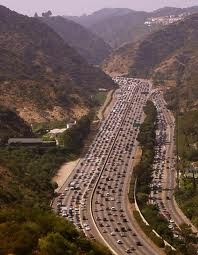
First, LA is a logistical nightmare. It’s no secret that the traffic is bad. But no matter how much you read about it or no matter what people tell you about the traffic, you can never really appreciate it unless you experience it firsthand. If you work in the media business, chances are you will be required to travel across the city during the most inconvenient hours. It’s going to wear you out. Those who survive have learned to deal with it and have made the necessary mental adjustments. It’s not only the interstate that’s a nightmare but also the surface roads. Trying to make a left-hand turn into traffic is almost impossible. It never stops.

Parking is also a terrible. My best advice is do what a friend of mine who works here has learned. Buy yourself a good navigational system for your car. It will be a lifesaver.

Second, LA is expensive. Sorry, no Wal-Marts. Whatever you think it will cost to live here, just add 30%. For example, the sales tax in LA in nearly 10%, and that adds up fast. Not only is parking difficult to find, when you do find it, fees are through the roof. This city is going to stretch and ultimately break your budget. But the most expensive thing about LA is housing. A studio apartment in a somewhat risky neighborhood will cost you somewhere between $750 to $950. Your single greatest obstacle will be to find a place you can afford that’s in a safe neighborhood. My best advice—bring a lot of money. You’re going to need it.

Third, how LONELY LA can be. Although the city has the second largest population base in the United States, it’s amazing how lonely this city can be, especially if you work in the entertainment industry. I’ve heard this first-hand from many people who work in the business. Why is that? Is it the competitive spirit that drives the entertainment industry? Or is it a matter of trust? Whatever the reason, it’s hard to make friends when people are less than genuine. The industry out here can often transform someone who is normally a good, honest person into a conniving backstabber. I know that may seem a bit harsh, but it is a word of warning that I’ve heard from friends here.

We as people of faith and followers of Christ must be diligent to remain faithful to the image of Christ. Isn’t that what it’s all about? Don’t let this city and the industry change you into someone you don’t want to be.

Another reason why this can be a lonely town is that if you do find a friend, he or she may live across town. And, as I said earlier about the traffic, people think twice about going out of their comfort zone.

Fourth, LA is a hard town to break into. I have a friend who is highly successful as an actor, director and model in her hometown. Her resume is impressive. She made a very good living and excelled at her craft. She recently moved to LA to pursue a career in entertainment. Finding an agent was almost impossible. Why? Because since she had not worked in the industry in LA, they didn’t consider her work to be valid.

That means you have to start from the ground up after years of hard work preparing yourself to come here. That’s painful and discouraging. It’s a town where nobody wants to give you a break. Without a recommendation from an industry insider, it’s hard to get your foot in the door. You’ll have to fight hard to promote and market yourself within this industry. Do you think you are ready to do that?

And, finally, LA is “the place” you must come to if you are serious about your career. At least at some point in your career, in spite of all the obstacles and roadblocks, almost everyone I have talked to has said that you MUST come to LA if you want to work in the film and TV industry.

Even people who say “sure you can produce and make films in your hometown” will often say in the next statement that you have to come to LA. The Industry is still in LA. The infrastructure is still in LA. The casting is still in LA. The studios are still in LA. The production companies are still in LA. The post houses are still in LA. I’m sure by now you’re getting the picture.

I realize advice is cheap. But maybe this is the best free advice you will ever hear. Know what you’re getting yourself into and be prepared emotionally, financially and spiritually to deal with LA and the challenges the industry presents. By all means, get connected BEFORE you move to LA. Find a church, a support system, and a fellowship group. Don’t go out there on your own. That’s a recipe for disaster.

And, by all means, remember to love LA because your going to have to.

Thursday, May 5, 2011

Beyond Digital….What Matters Now?

Biola University held their annual media conference on April 30, 2011 at the CBS Studio Lot in Los Angeles, California. Over the years, the Biola Media Conference has become a must-attend event for those of faith who work in mainstream media and entertainment. The conference offered an all-star line-up of Hollywood insiders who spoke out on issues that impact the direction and the future of entertainment and media. This year’s conference was no exception with the theme being Beyond Digital....Matters Now?

Few would disagree that today’s media and entertainment industries are facing enormous challenges and obstacles. The only constant is change. Thanks to the digital revolution With rapid shifting technologies and diverse delivery methods, speakers such as futurist Kevin Kelly, founder of Wire Magazine, stated that the only certain thing is “wherever attention flows, money will follow”.

Obviously, knowing where the attention will be directed is always a guessing game in today’s media world. Kelly also stated that screening is the new paradigm. We now live in a society where we are surrounded by electronic screens. But, in the future, change will come as the screens will adapt to our needs and purposes. Not only will we be watching screens, but the screens will have the capability to watch us. Kelly called it eye tracking because the screens will be able to detect our eye movements thus indicating what we find interesting and engaging on the screen.

The conference was hosted by media guru Phil Cooke, who also echoed the theme of the conference. Cooke has a new book out called Jolt. It speaks about surviving in a world that’s constantly changing. He stated that many in today’s media industry are being bypassed for promotion because they are not capable of keeping up with the ever-changing media industry.

As usual, the breakout sessions and workshops covered a multitude of topics. Especially interesting was Bill Marsilli, the screenwriter for Déjà Vu. He gave advice on how to incorporate spiritual themes into mainstream feature films. Bobette Buster, a screen and television writer, hosted a seminar on Hollywood Economics 101. She described the future media world by using the term, atawad, which means anytime, anywhere, any device. In this scenario, the consumer will have total control of his or her media choices. Although this is an exciting concept, it also presents challenges for content producers and distributers.

Christian filmmakers also got into the act with a workshop hosted by producer Dan Rupple on the issue of bringing films of faith to screen. Bobby Downs, a panelist, who produced the award-winning film Like Dandelion Dust, discussed a new emerging model that will compete with both mainstream and Christian films. He pointed to films such as The Blind Side and Soul Surfer as examples of movies that embrace this new shift.

New to this years conference was the Access Lunch. Participants could select an area of interest in their field, such as writing or producing, and have an opportunity to have lunch with an industry insider who is an expert in that area. Conference organizers hoped this would provide a more intimate setting that would spark discussion and dialogue.

Media missionary school was on hand to conduct several interviews with conference speakers, panelists, and participants. In the following weeks, you will see many of these posts on this site.

The closing session featured several well-known speakers, including Tom Halleen, Senior Vice-President of Programming at AMC and DeVon Franklin, Vice-President of Production at Columbia Pictures. Both shared their insight on what has helped them to be successful in Hollywood. Halleen believes that his success is due to his ability to take care of the small things. Franklin believes what has helped him the most is his ability to read a room and to read people.

If there was one constant theme that emerged, it’s all about telling a good story. The fact is this theme has been consistent in practically every Biola media conference from it’s inception.

The final session featured an interview by Phil Cooke with actor, producer and director Sean Astin of Rudy and Lord of the Rings fame. Astin echoed the theme of good storytelling as a must. Perhaps, the only thing that seemed a bit strange was that Astin did not necessarily speak about the main theme of the conference, Beyond Digital…What Matters Now. Although it was interesting to listen to his experiences as an actor, I felt that we were missing something because it did not inspire the audience in both a spiritual or practical means to deal with a changing world that we all face.

Overall, the conference organizers did an outstanding job. Considering the time restraints and the fact this is primarily a volunteer effort, it is amazing what they pulled off. It’s clear that attendees had many “take-aways” from this conference.

The Biola Media Conference will be held next year in late April or early May. I encourage you to consider making it a priority for 2012.

Photography by Nathan Morgan, Kelsey Heng and Harold Hay

Special thanks to Jenna Bartlo, Media Relations Coordinator - Biola University